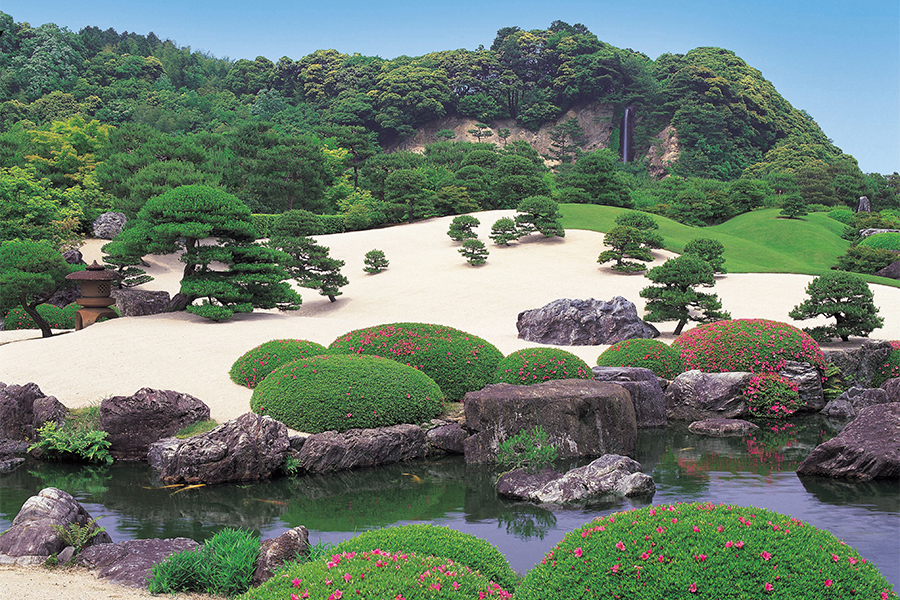













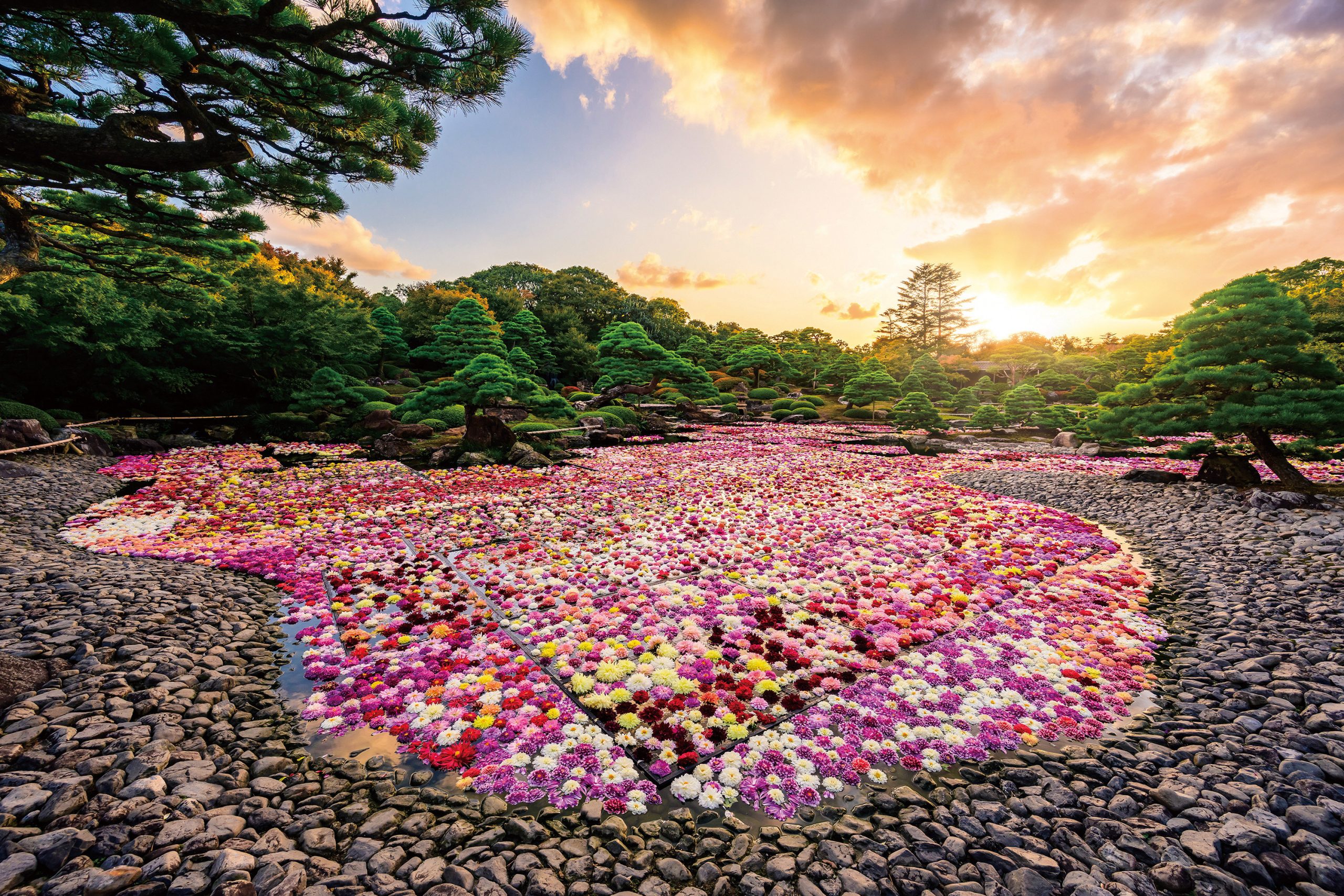
Yuushien, a ‘miniature garden of Izumo’, featuring landscapes and mythology of Izumo area, is a traditional Japanese-styled walk-through garden around ponds. It is located in the centre of Daikonshima Island. Visitors can enjoy prominent peony flowers which can be viewed all year round as well as the many colours of the various seasonal flowers. Daikonshima is globally renowned as a growing area for Korean ginseng. You can also try a free-tasting of ginseng tea at the ginseng office that was restored from the Edo period. Come and experience the long cultural history of Daikonshima. Japanese Peony and Korean Ginseng Village.
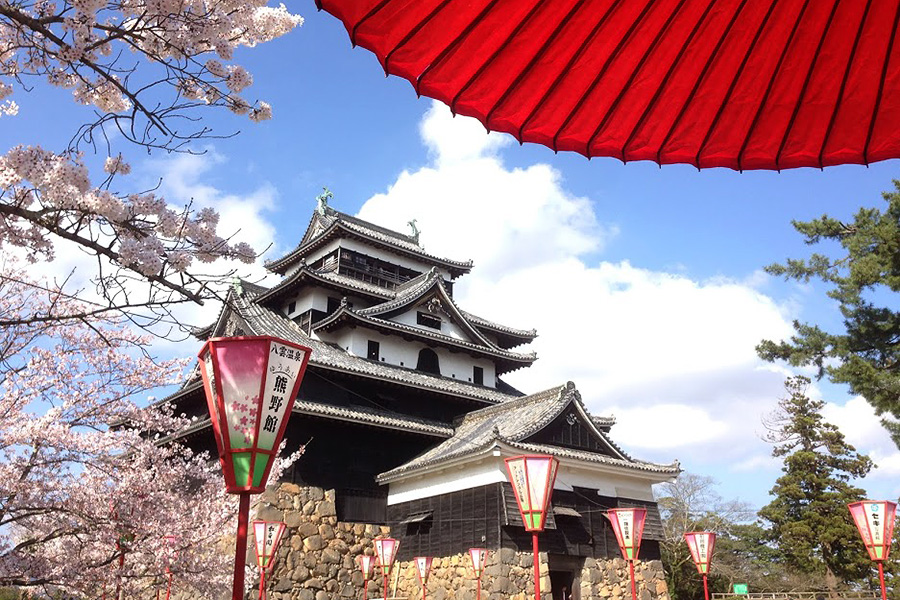
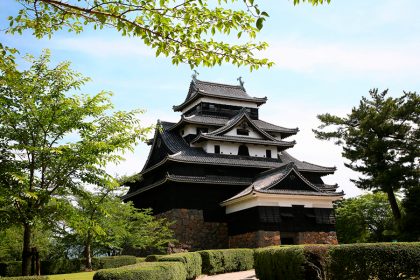
Remnant from samurai times and one of only five Japanese keeps designated as a national treasure
Constructed over a period of 5 years from 1607 to 1611 by Yoshiharu Horio, a feudal lord and founder of Matsue. Currently it is one of the only 12 remaining original castles in Japan and the only one in the San’in region. It was designated as a National Treasure in 2015. The elegance of the castle’s swooping roofs and decor is often compared to the wings of a ‘chidori’ (plover bird) which has led to the castle’s nickname,’Chidori-jo’ (Plover Castle). The castle features an architectural design specifically chosen for battle, but retains a grand majestic appearance.
島根県松江市殿町1-5 : 1-5 Tonomachi, Matsue City, Shimane Prefecture
Tel. No.
0852-21-4030
Operating Hours
【When the Honmaru gates open】
[April to September] 08:00 to 18:30
[October to March] 08:00 to 17:00
【Castle tower entry】
[April to September] 08:30 to 18:00 (Reception is until 17:30)
[October to March] 08:30 to 17:00 (Reception is until 16:30)
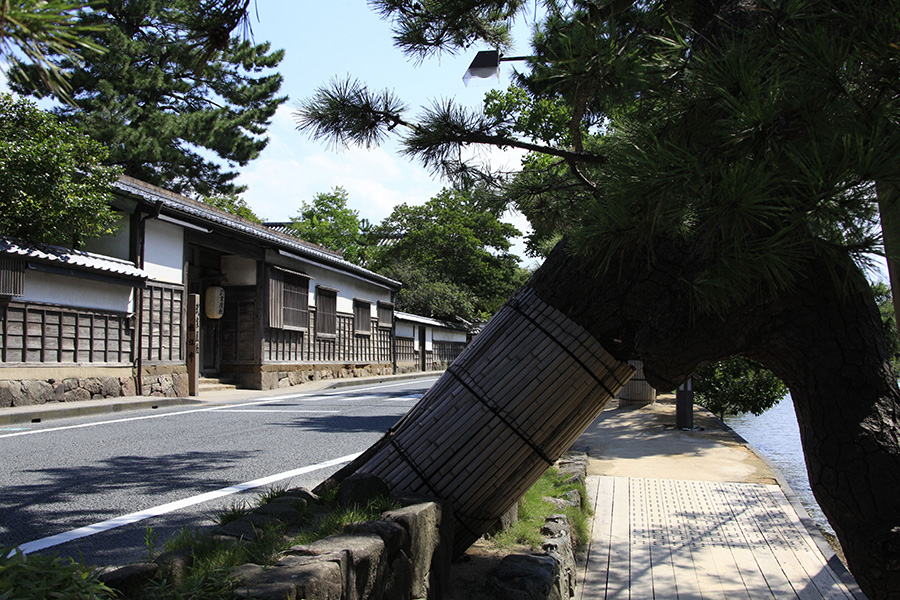
Popular neighborhood with a distinct former-castle-town atmosphere
Lining Matsue Castle’s northern moat, Shiomi Nawate Street is a designated Cultural Preservation Area. Along this street you will find the Former Samurai Residence (Bukeyashiki), the Lafcadio Hearn Memorial Museum and his former residence, the Tanabe Museum of Art, showcasing tea utensils once belonging to Feudal Lord Matsudaira Fumai, and the Meimei-an Tea House.
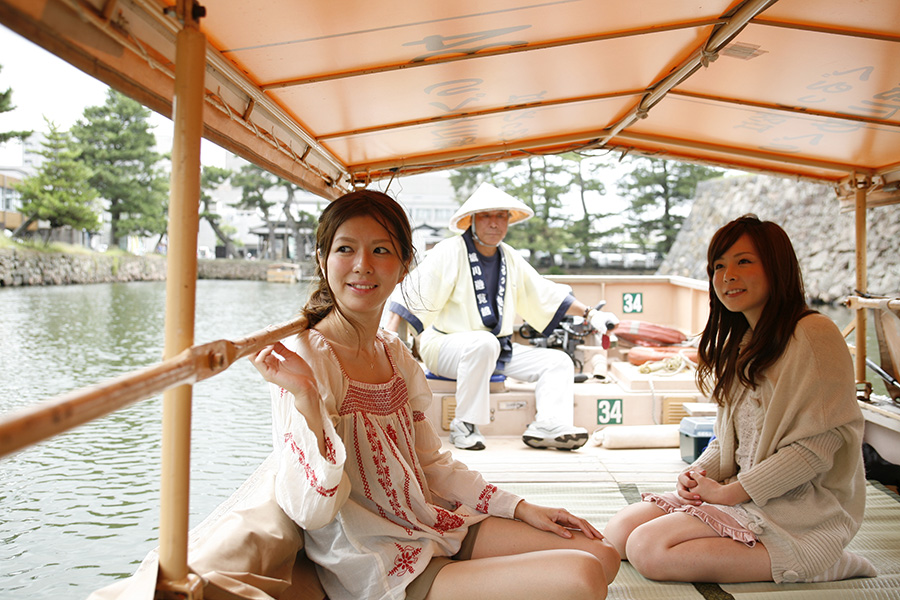
Boat ride through Matsue's waterways and castle moat
This small passenger boat will take you through the history, nature and people of Matsue. The moats surrounding Matsue Castle (National Treasure) remain unchanged from when it was first constructed over 400 years ago. This 50 min sightseeing boat guides you along the moats through the historical Japanese-scape of the Matsue castle, the places related to Lafcadio Hearn, forests which have been there 400 years since the construction of the castle, charming changes of seasons and the beauty of moats itself.
[March 1 to June 30] 09:00 to 17:00
[July 1 to August 15] 09:00 to 18:00
[August 16 to October 10] 09:00 to 17:00
[October 11 to November 30] 09:00 to 16:00
[December 1 to February 28] 09:00 to 16:00
*Departs every 20 minutes from March 1 to November 30, and every 30 minutes from December 1 to February 28
Closing days
None (may be closed in stormy weather or to change courses)
On October 12th, Matsue welcomed the grand opening of the newly-renovated Karakoro Art Studio, transforming it into a bustling center for creativity and community gatherings. Located in the heart of Matsue, Karakoro Art Studio has long been cherished as a symbol of Matsue’s cultural heritage, and its latest evolution brings a fresh wave of excitement.
Activities by Osewa-san
Karakoro Art Studio now boasts an array of workshops and spaces where visitors can immerse themselves in traditional and modern Japanese crafts. The studio offers hands-on experiences that showcase the rich artistic traditions of Shimane Prefecture. Local artisans are on hand to guide participants, making this the perfect destination for curious visitors.
Yaoyorozu Market and Kitchen
The opening also features the new Yaoyorozu Market and Kitchen, a must-visit for anyone wanting to experience local ingredients and products made here in Shimane. Here, visitors can shop for locally produced goods and sample gourmet foods that reflect the region’s culinary richness.
Karakoro Food Hall
Beyond the artistic experiences, food lovers have much to look forward to. The renovated complex now houses nine new food and drink establishments, each offering a unique taste of Shimane. From locally sourced produce to traditional flavors with a modern twist, these new eateries add another layer of attraction to the vibrant cultural space. Whether you’re craving something sweet or savory, there’s something for everyone to enjoy.
[Main Building] 9:00 am ~ 9:00 pm
[Yaoyorozu Market] 8:00 am ~ 8:00 pm
[Karakoro Food Hall] 8:00 am ~ 11:00 pm *some restaurants may close earlier than others
Take a break and relax with delicious pieces of art and green tea
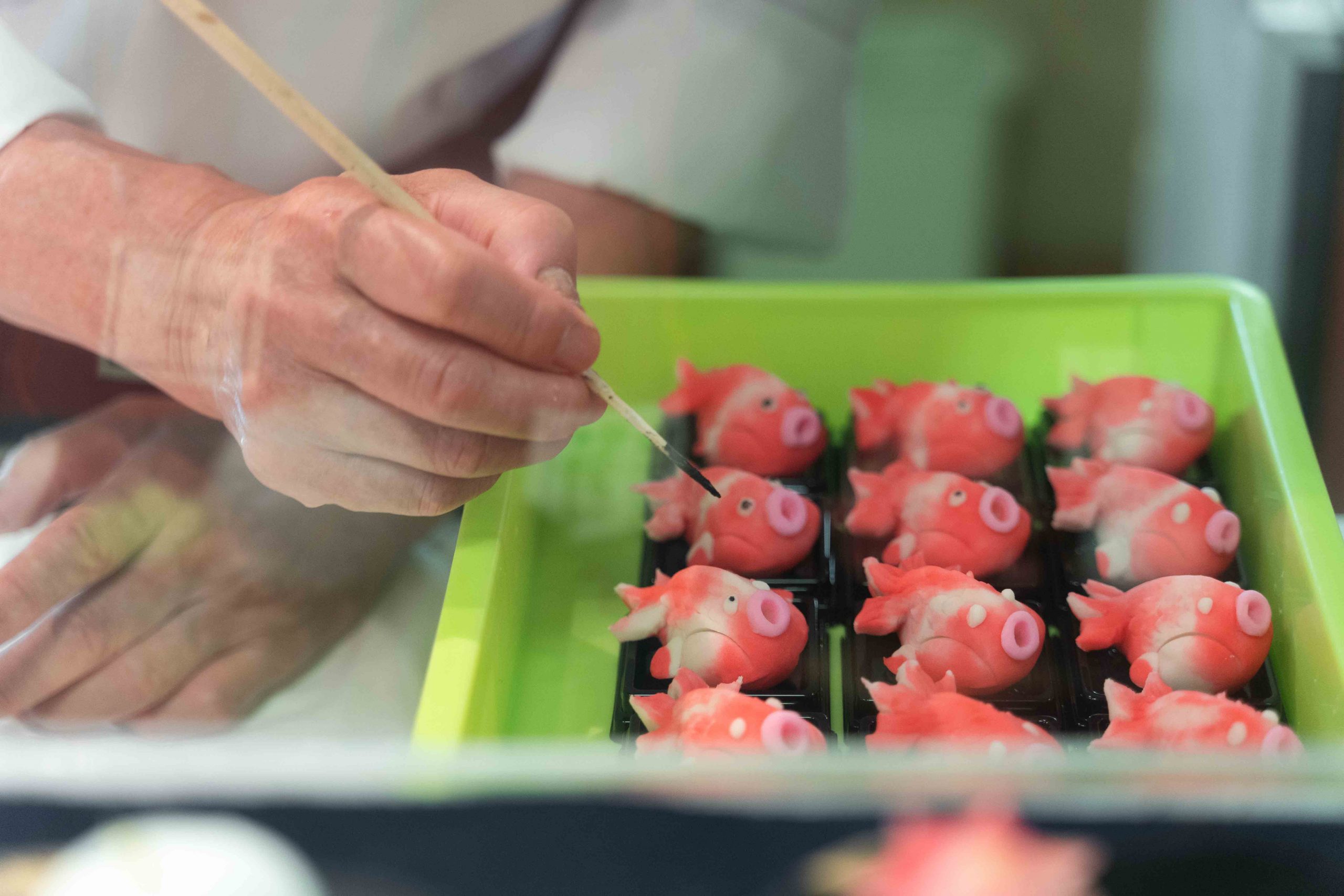
A Japanese style cafe inside the building of Matsue History Museum that provides a view of the Izumo-styled Japanese garden and Matsue Castle. Enjoy the tastes of green tea (matcha) with delicate original wagashi confectionaries that change with the season.
Storied hot spring renowned for its skincare effects
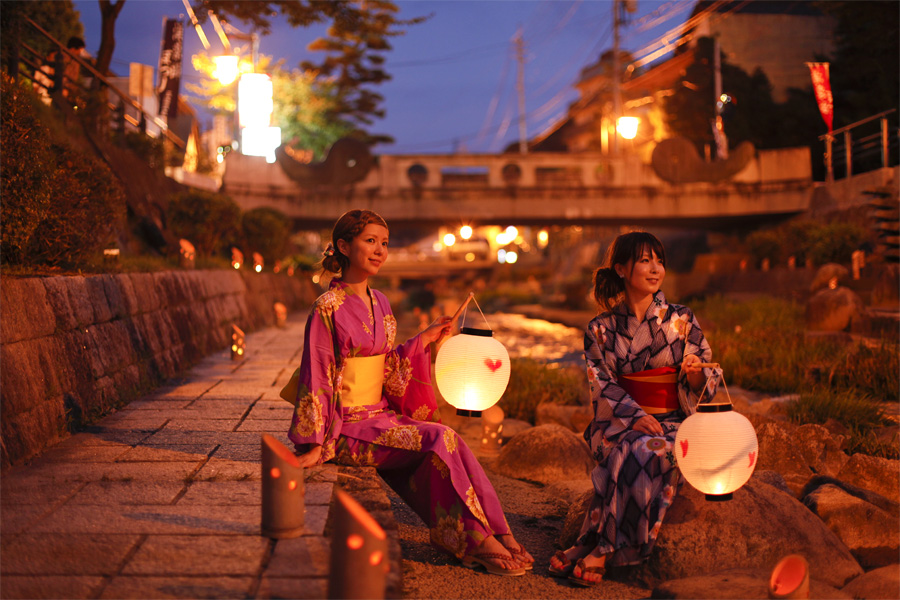
One of the oldest onsens in Japan, Tamatsukuri Onsen has a history dating back to at least 733 AD, where it was introduced as “The Bath of The Gods” in the Ancient Chronicles of Izumo. You can stay at any of the 22 traditional Japanese inns that lie the banks of the Tamayu River, which runs through the heart of this picturesque onsen, or if you prefer, there are luxury hotels available which can accommodate up to 700 guests.
Congregation of the gods, blessed with the power of en
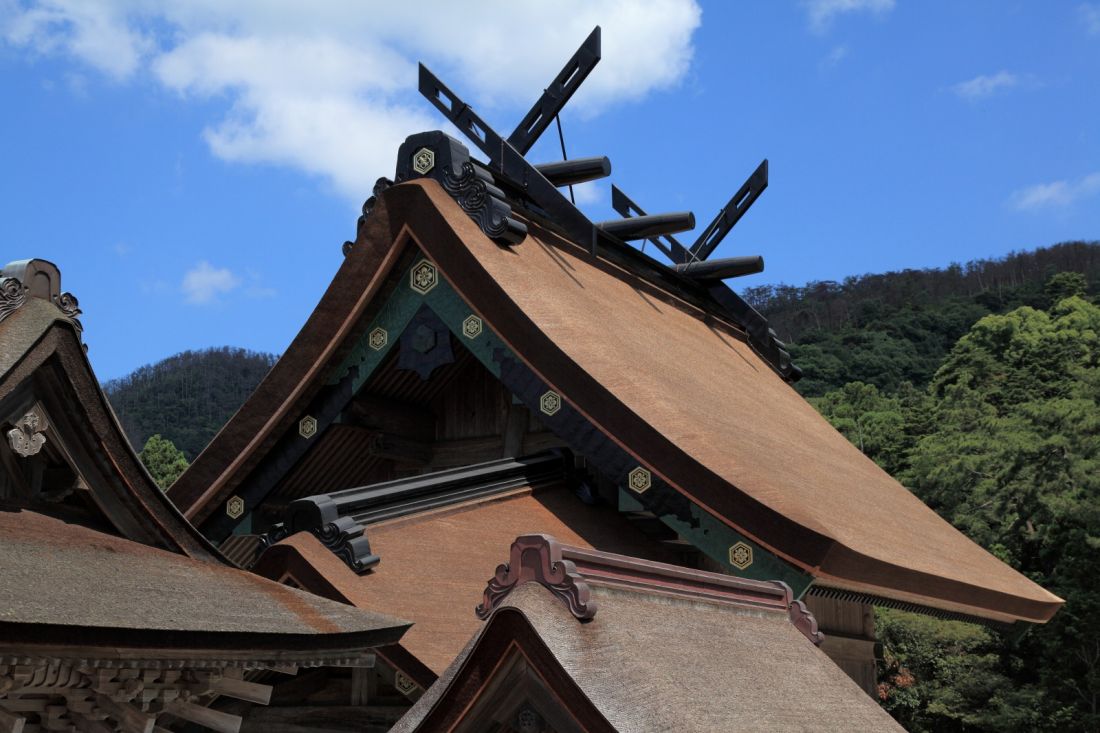
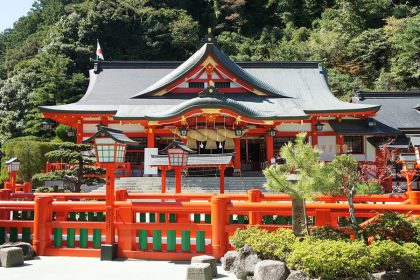
Dedicated to the Shinto god of “en” (the ties that binds us together) Okuninushi-no-Okami, Izumo Taisha Grand Shrine is one of the oldest and most venerated shrines in Japan. The main hall is constructed in the “taisha-zukuri” style, one of the oldest form of shrine architecture in Japan, and has been designated as a National Treasure. Each year during the 10th month of the Lunar calendar the gods from throughout Japan congregate at Izumo Taisha for their annual meeting. Only in Izumo is this month known as “The Month With Gods.” The “shimenawa” (sacred straw rope) that hangs at Kagura-den (sacred dance hall), weighing an impressive 5 tons, is one of the largest in Japan.
A beach with superb sunsets where Japan’s myriads of deities arrive every year
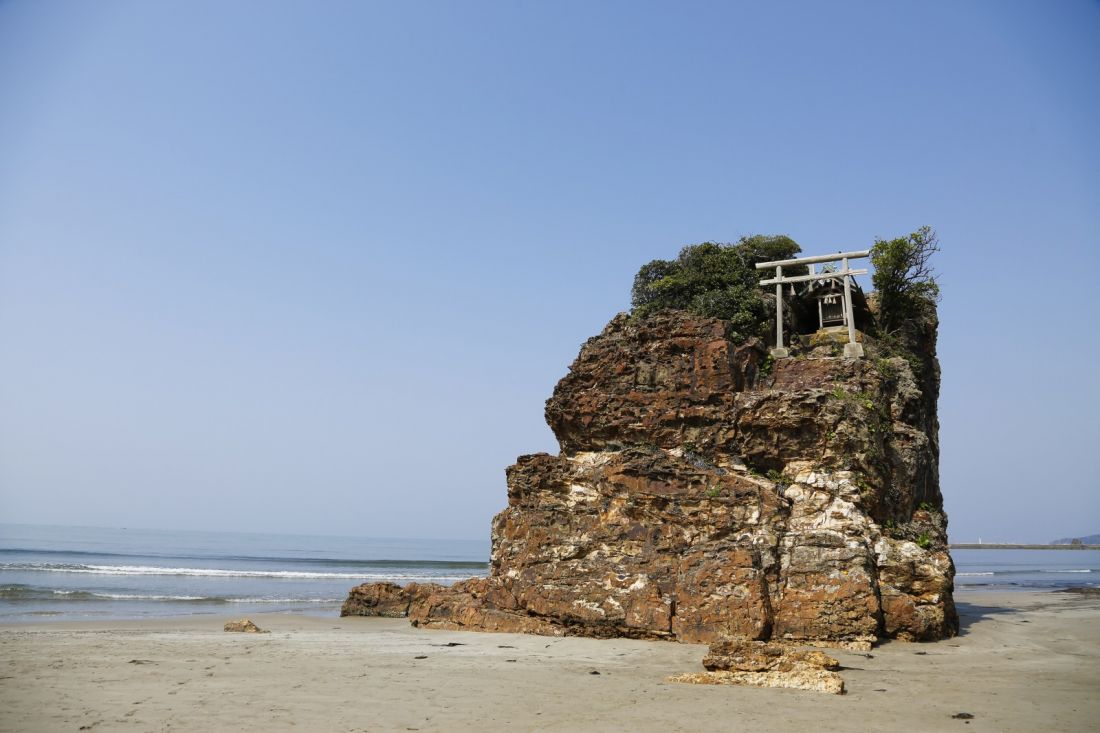
Located on the coast to the west of Izumo Taisha Grand Shrine, Inasa-no-hama Beach is a spiritual spot with a mythical connection. There is a small island known as Benten-jima, and a small shrine sits upon this rock. The white sandy beach forms a long and beautiful arc, and the view of the evening sun sinking behind the silhouette of Benten-jima is stunning. As a symbol of “Izumo, sacred place of the setting sun,” it is even recognized as a Japan Heritage. It is also the beach of the kamimukae ceremony held on the 10th day of the 10th lunar month to welcome gods from throughout Japan. In addition, in summer, it is also popular as a swimming beach.
Preserving the history of ancient Izumo and Shimane (Temporarily closed until October 2026 due to renovation work)
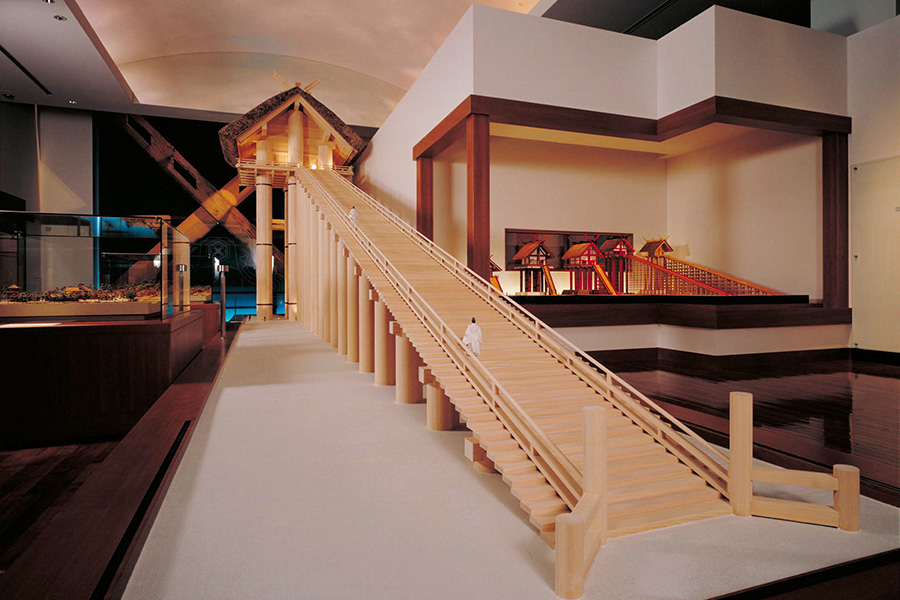
Located next to Izumo Taisha Grand Shrine, this museum introduces the history and culture of ancient Izumo and Izumo Taisha Grand Shrine. The collection includes the largest amount of ancient bronze swords and bronze bell-shaped vessels (National Treasures) which were excavated in tremendous scales from two sites in Izumo. It also houses the Uzubashira Pillar, a huge pillar found in the ruins of the Izumo Taisha Grand Shrine, and a 1/10 scale model of the main hall of ancient Izumo Taisha Grand Shrine that was said to be as high as 48m.
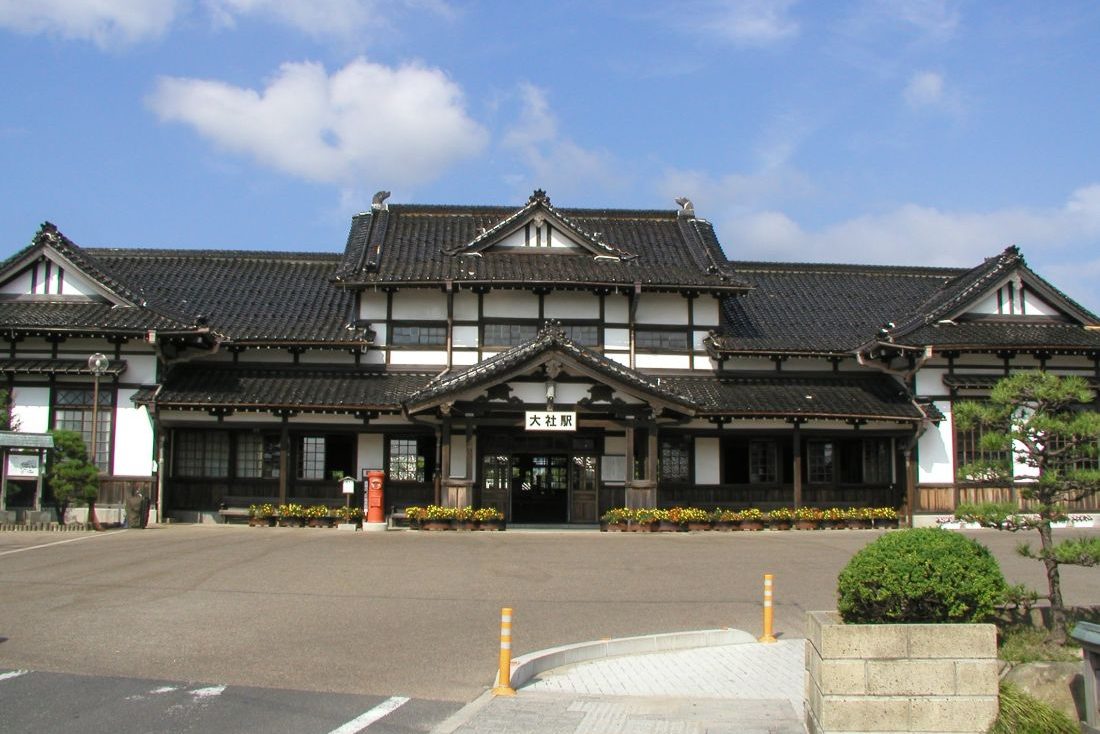
A station that is widely-considered to be the preeminent example of a Japanese-style station building
Fitting for its location at the front entrance of Izumo Taisha, the station building of the former Taisha Station is a wooden, single-storied building in the classical Japanese style. The building’s Japanese-style design elements are conspicuous, including a central roof section that features ornamental ridge-end tiles at both ends, and gegyo (lit. “hanging fish”) gable pendants that are attached to the roof’s gable sections. In addition, the roof tiles used at the ends of the roof’s descending ridges recall various movements of a turtle. In this and other ways, there are design elements throughout the station building that are thought to show the influence of Chuta Ito, a pioneer in the field of architecture. This station was completed in 1912 and remodeled in 1924. It was designated an Important Cultural Asset in 2004.
*Currently closed for renovations until December 20, 2025
Home to Japan's most beautiful garden and an impressive nihonga collection
Conveying the harmonized beauty of Japanese paintings and Japanese Gardens is the aim and wish of Adachi Museum of Art, which is best known for having one of the greatest collections of modern to contemporary Japanese arts. Such works of art include numerous masterpieces by the great Japanese painter Yokoyama Taikan, ceramics and 165,000 square-metre Japanese gardens. This museum is listed as a three-star site in the Michelin Green Guide Japan while Adachi’s spectacular and immaculately maintained Japanese Garden have been ranked at No.1 in a row since 2003 by Sukiya Living Magazine : The Journal of Japanese Gardening. You can appreciate the splendid beauty of their gardens which show a different appearance as time / days / months / seasons change.